Introduction: Why Coil Types Matter in Innerspring Mattresses
In the UK, innerspring mattresses have long been a staple of households seeking a dependable blend of support and bounce. The coil system is the beating heart of many mattresses, translating body weight into a responsive sleep surface. When you choose a mattress, coil type, coil count, and gauge collectively determine how the bed supports your spine, how it distributes weight, and how durable it feels over time. This guide is designed to demystify the three most common coil systems—Bonnell, pocketed, and continuous coils—and to help you interpret the jargon that accompanies them so you can shop with confidence.
We’ll also weave in practical UK-focused buying considerations: what to look for in warranty terms, what coil counts mean in real terms, and how the layering of comfort materials can alter the perceived firmness and pressure relief. By the end, you’ll understand not just the coils themselves, but how the entire sleep surface collaborates to deliver comfort, alignment, and durability.
Bonnell Coils: The Classic, Interlocking System
Bonnell coils are a traditional, interconnected network of hourglass-shaped springs. They share a common core, with each coil linked to its neighbours. The benefits of Bonnell systems lie in their time-tested durability and predictable feel. They often deliver strong edge support and a firmer overall feel, which can be a good match for sleepers who prefer a more supportive sleep surface or who sleep on their back or stomach.
Edge support matters because you’ll spend a lot of time near the mattress edge—whether you’re sitting on the edge or sharing the bed. A Bonnell-based construction can maintain a consistent feel from centre to edge if the border is well-engineered. However, because the coils are connected, there can be some motion transfer when a partner moves, though high-quality Bonnell designs can mitigate this with careful layering and zoning.
Tech notes for UK shoppers: Bonnell coils are often found in mid-range models and can be a good value pick. When evaluating Bonnell designs, look for coil counts that suggest robust support, and inspect whether there is a separate comfort layer (foam, latex, or other padding) that softens the surface. Warranty terms can provide clues about durability expectations; ensure the warranty explicitly covers spring system integrity and edge performance over time.
Pocketed Coils: Independent Support for Contours
Pocketed coils, also known as individually wrapped coils, sit in their own fabric pockets. Each coil moves independently, allowing the sleep surface to adapt to the body’s contours with minimized motion transfer. This architecture generally delivers superior contouring and targeted support, which can aid spinal alignment for many sleepers, particularly those who change positions at night.
The advantage of pocketed coils extends to pressure distribution. Because coils are isolated, they respond to localised weight without the whole mattress moving in tandem. This often translates to improved pressure relief in the shoulders and hips for many side sleepers, while still maintaining support for the lumbar region.
UK buying cues: Pocketed coil mattresses often pair well with layered comfort foams or latex for a balanced feel—soft at the surface but supportive beneath. A higher coil count can influence adaptability and motion isolation: more coils mean finer zoning potential, but quality of materials and assembly still determine overall performance. Always check the gauge of the wires (thickness) and the stitching quality around the coil row to gauge durability.
Continuous Coils: A Continuous Thread Through Comfort
Continuous coil systems use a single continuous wire shaped into multiple coils, creating a wave-like network that runs across the mattress. This design can deliver consistent support along the length of the bed and often emphasizes durability and even weight distribution. The feel can be a blend between the solidity of Bonnell and the adaptiveness of pocketed systems, depending on the sophistication of the wire pattern and the accompanying padding.
For sleepers seeking durability and a more uniform response, a continuous coil design can be appealing. The continuous connection may provide dependable edge support and reduced motion transfer compared with some traditional Bonnell constructions, though it can vary widely by manufacturer and build quality.
Buying practicalities in the UK: Look for how the continuous coil system is integrated with other layers, such as high-density base foams or transition foams that influence overall bounce and support. Warranty details are important here; a robust warranty that covers coil-line continuity and edge support is a good signal of a durable build.
Coil Counts, Gauge, and the Layering of Comfort Materials
Beyond coil type, two other technical dimensions shape how your bed feels: coil count and gauge. Coil count, the total number of springs, influences the distribution of support across the sleep surface. In general, higher coil counts can offer finer zoning and more tailored support, but the relationship isn’t strictly linear. The manufacturing approach, coil type, and the quality of the rest of the materials matter just as much as the tick marks on the count.
Gauge refers to the thickness of the wire used to form each coil. A lower gauge (thicker wire) typically yields a firmer, more durable spring, while a higher gauge (thinner) coil can contribute to a softer feel when paired with supportive foams or latex. It’s the combination of coil count, gauge, and the top and middle layers that ultimately determines the overall feel and durability of the mattress.
Comfort layers—such as memory foam, polyfoam, latex, or natural materials—sit above the coil system and shape pressure-relief, temperature regulation, and initial feel. A mattress may employ quilting, foam layers, and resilient materials to balance pressure relief with spinal alignment. In a UK context, the layering often aims to deliver a breathable, temperature-neutral surface, important for summer nights and damp UK winters alike.
Strategies for shoppers: look for clear specifications on coil count ranges, coil gauge, and a breakdown of each layer's material. When in doubt, seek out independent reviews and, if possible, test the mattress in store to understand how the combination of coils and comfort layers translates to your comfort needs.
Buying Tips and UK-Specific Considerations
UK buyers often weigh dimensions, regulations, and warranty terms with equal care. Here are practical tips to help you shop confidently:
- Understand the coil system first, then examine coil count and gauge as supporting details. The feel of the top layers determines your initial impression, but the coil system largely governs long-term support and durability.
- Check the edge support: a robust border increases usable sleep surface and improves durability at the mattress perimeter.
- Read the warranty with a fine-tooth comb. Look for coverage of spring integrity, sagging limits, and edge performance. UK warranties often have varying terms by model and brand; a longer warranty can signal confidence in coil durability and overall construction.
- Consider your sleeping position. Side sleepers may prioritise pressure relief at shoulders and hips, while back and stomach sleepers might emphasise spinal alignment and a firmer, more stable surface.
- Assess temperature regulation. Material choices above the coils affect how heat and moisture dissipate. If you’re a warmer sleeper, prioritize breathable fabrics, natural fillings, and open-cell foams that promote airflow.
In short, the coil system matters, but so do the layers above and around it. The best mattress for you in the UK context is the one that aligns with your sleep preferences, budget, and durability expectations, backed by transparent specifications and credible warranty terms.
Conclusion: An Informed Choice for a Great Night’s Sleep
Choosing the right innerspring mattress involves balancing coil type, coil count, gauge, and the comfort layers that cap the spring unit. Bonnell, pocketed, and continuous coils each offer distinct advantages, and your best option depends on your priorities—durability, contouring, motion isolation, or edge support. In the UK market, transparent specifications and solid warranty terms help you separate the durable builds from marketing fluff. By understanding these core coil designs, you empower yourself to select a mattress that not only supports your body but also contributes to a restful night's sleep night after night.
Key Figures Throughout Sleep and Mattress History
To illuminate how mattress technology evolved, here are three influential individuals from different eras who shaped how we understand sleep, comfort, and support:
Thomas Hancock (1786–1865)
As a pioneer in the industrial era, Hancock’s experiments with industrial textiles and materials helped pave the way for durable bedding fabrics and the mechanisation of production. His contributions established a framework for the durable covers and ticking materials often used to encase springs and foams in the modern era, enabling longevity and hygiene in mattresses.
James Marshall (20th century)
Marshall is credited with advancing the concept of independently housed springs, a precursor to pocketed coil systems. His work in separating coils into individual chambers helped reduce motion transfer and improved contouring, laying the groundwork for the modern pocketed coil design beloved by many sleepers today.
Dr. Eva L. Simmons (late 20th–early 21st century)
As a sleep researcher and ergonomics expert, Simmons emphasized the relationship between mattress design and spinal alignment. Her work highlighted how different coil configurations interact with surface materials to influence pressure distribution and sleep quality, guiding manufacturers toward more science-backed, user-friendly sleep surfaces.
These figures remind us that mattress design is a living history—an ongoing dialogue between ingenuity, anatomy, and daily life. In the UK, this lineage continues as brands refine coil systems and materials to improve comfort, durability, and overall sleep health.
Product Spotlight: Vispring Heaven Mattress Topper
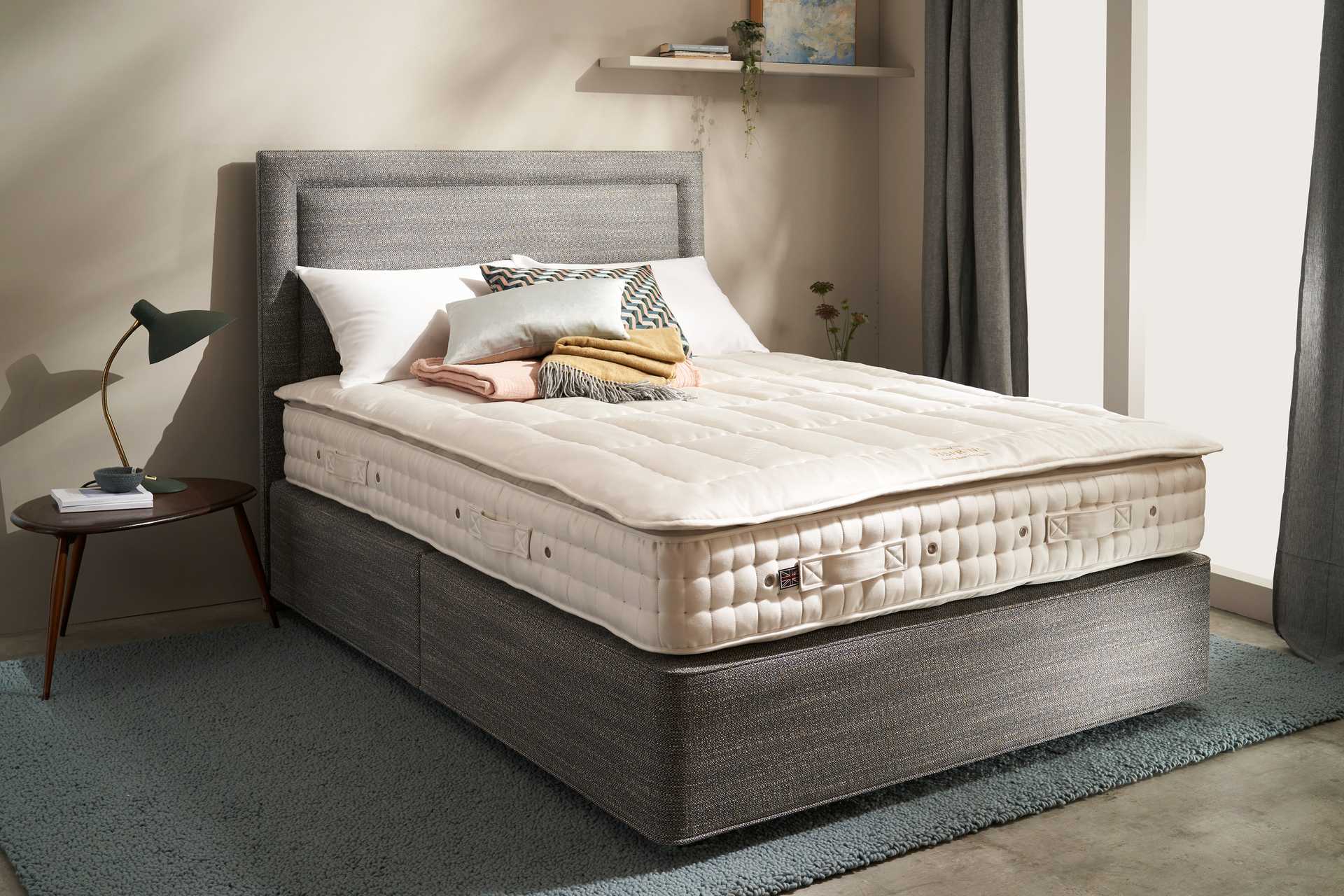
The Vispring Heaven Mattress Topper embodies the luxury end of the spectrum, offering a premium layer of comfort that can complement a range of innerspring foundations. Crafted with British fleece wool and soft-needled wool, it provides temperature regulation and pressure relief. While not a replacement for a high-quality mattress, a topper like Heaven can extend comfort and support, especially when paired with a robust coil system in a well-constructed base.
Pricing and availability vary by retailer, but the topper exemplifies how top-layer materials influence the feel of the night’s sleep when used in tandem with inner coil architectures. For shoppers who prioritise luxury and sustainability, Vispring’s line illustrates the blend of craftsmanship and material science that defines premium sleep surfaces.
Product image provided by retailer
Vispring Heaven Mattress Topper — Vispring • 2" height • Organic British wool blend • Temperature regulation and pressure relief.
Images are displayed here for illustrative purposes in the article context. For ecommerce display, ensure alt text and accessibility considerations accompany each product image.
Glossary and Resources
- Coil count: The total number of springs in the mattress; higher counts can imply more nuanced support.
- Gauge: The thickness of the coil wire; lower gauge is thicker and typically firmer.
- Edge support: The robustness of the mattress perimeter; strong edge support increases usable surface area.
- Motion transfer: The degree to which movement on one side is felt on the other; pocketed coils generally reduce motion transfer.