Introduction: The Coil as Character
The innerspring is not merely a mechanism of support; it is a narrative of balance—between bounce and stability, between motion isolation and responsive comfort. In a world crowded with foam layers and graphic claims, the coil system remains a quiet conjurer, shaping sleep from the inside out.
Coils are not created equal. A mattress’s heart—the spring unit—determines how weight is distributed, how the body aligns along the spine, and how heat moves away from the skin. Coil design is a decisive variable in comfort, durability, and even health considerations such as pressure relief and edge support. In this guide, we’ll trace the arc of coil design from Bonnell classics to modern pocketed systems, while anchoring the discussion in practical guidance for choosing a model that fits sleep style, body weight, and preferred firmness.
Coil Configurations: Bonnell vs. Pocketed, and the In-Between
Two broad families dominate the landscape: Bonnell coils and pocketed (siege-like) coils. Bonnell coils are interconnected, offering a durable, bouncy feel with a continuum of surface support. They can yield robust edge strength when paired with reinforced borders, but they typically transfer movement more readily across the surface. Pocketed coils, by contrast, are individually wrapped. This isolation allows each coil to respond to pressure independently, delivering targeted contouring and improved motion isolation—a feature especially valued by couples or light sleepers who share a bed with a restless partner.
Beyond the binary, modern innersprings layer zoning, coil counts, and gauge variations to tailor pressure relief along the torso, hips, shoulders, and lumbar region. A higher coil count often implies finer zoning under a given mattress height, while finer gauge (a thinner wire) permits more conforming response but may trade off some long-term durability. The design objective remains clear: align the spine in neutral while distributing body weight to minimize pressure points.
Zoning, Edge Support, and Body Weight: How We Sleep
Zoning breaks a mattress into regions with varying coil stiffness. A common arrangement places greater support in the lower back area and softer zones near the shoulders and hips, corresponding to the typical sleeping posture. For heavier sleepers, robust edge support and a firmer feel across the surface can prevent sagging at the edges, preserving a usable sleep surface. For lighter sleepers, a more generous contouring may be desirable to relieve pressure without creating excessive sinkage.
Edge support is not a mere accessory; it defines how a bed handles sitting on the edge, getting in and out, and full-site sleeping across the mattress. A well-engineered edge—through reinforced coils or stabilizing perimeters—keeps the sleep surface consistent from edge to center, avoiding that dreaded “falling off” sensation when you approach the side of the bed.
Seasonal Considerations and Temperature Regulation
Innerspring systems often breathe more readily than dense foam constructions, especially when paired with breathable comfort layers such as latex, natural fibers, or wool. The coil system itself can influence thermal behavior: air channels form between coils, and the overall structure affects how heat moves through the mattress. For hot sleepers, a lighter comfort layer and a coil system that promotes airflow can make a noticeable difference.
Seasonality—where a bed feels cooler in winter or warmer in summer—depends not only on materials but on the overall architecture. The insulating properties of wool wraps, cotton fabrics, and latex overlays can temper the cycle of temperature fluctuations, allowing many innerspring models to maintain a comfortable middle ground between firmness and conformity.
Case Studies: Notable Models and Materials
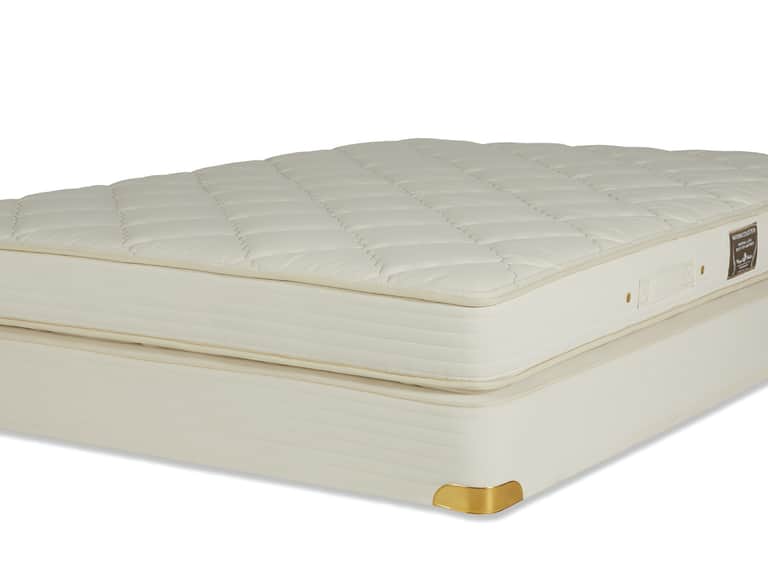
In the annals of the industry, certain models stand out for their blend of traditional craft and contemporary engineering. The Royal-Pedic Natural Cotton Mattress with Wool Wrap exemplifies a marriage of robust spring performance with breathable natural materials. The wool wrap serves not merely as insulation but as a regulator, helping to moderate moisture and temperature while maintaining sturdy support.
Naturepedic’s chorus of organic cotton innerspring constructions demonstrates how organic fabrics and responsibly sourced components can deliver a clean, breathable sleep surface with reliable structural support. These designs showcase how edge reinforcement, coil zoning, and high-quality encasements contribute to a durable and comfortable night’s rest.
The Obasan Case: Customization Within Structure
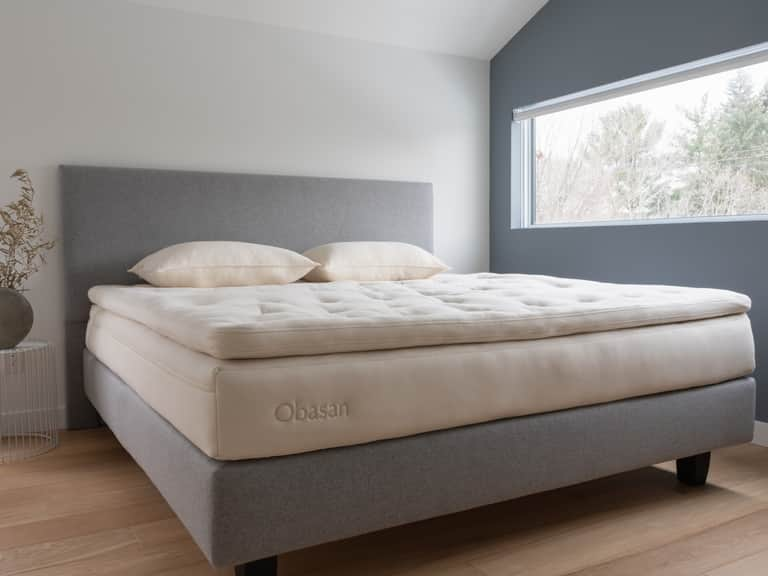
The Obasan Classic Dunlop Latex Mattress reimagines the notion of a coil-based sleep surface by embracing latex layers beneath a wool-and-cotton quilted cover. While not a traditional innerspring, its layered approach to support and comfort offers a lens through which to view coil designs: both seek to distribute body weight evenly, relieve pressure points, and maintain alignment. The Obasan system demonstrates how modern innerspring-adjacent designs—whether coils or latex cores—benefit from modular layering that respects temperature regulation and tactile feedback.
Key Voices Across Time: Three Figures Shaping the Sleep Conversation
Ergonomist of the 19th Century: Hans Georg von Moll
A theoretical forebear who imagined postural harmony as a physics problem. While not a mattress inventor, von Moll’s conceptual emphasis on alignment foreshadowed modern ergonomic thinking about the spine’s curvature and the distribution of pressure across a sleeping surface.
The 20th-Century Engineer: Charlotte Rietveld
A designer who bridged steel-sprung foundations with foam and fabric to curate a balanced sleep experience. Her work imagined perimeters that held shape at the edge while allowing a quiet, responsive middle—an early intuition for edge support and zoned resilience.
21st-Century Material Scientist: Dr. Maya Chen
A contemporary voice in the science of comfort, Chen’s work on thermal regulation and breathable fabric composites informs how modern innerspring systems weave temperature-conscious covers and layer composites that align with the spinal axis.
These figures—spanning centuries—remind us that the bed you sleep on is the product of an ongoing conversation between biomechanics, materials science, and timeless craft. The coil, while often out of sight, remains a chorus in this dialogue, contributing cadence and rhythm to the nightly rehearsal of rest.